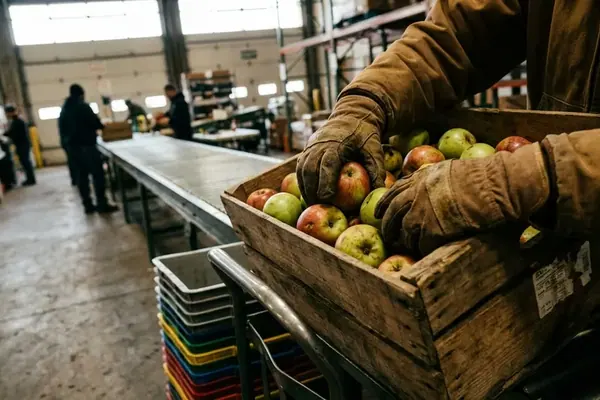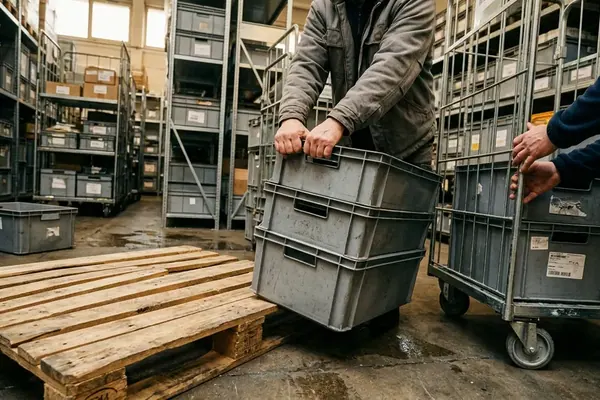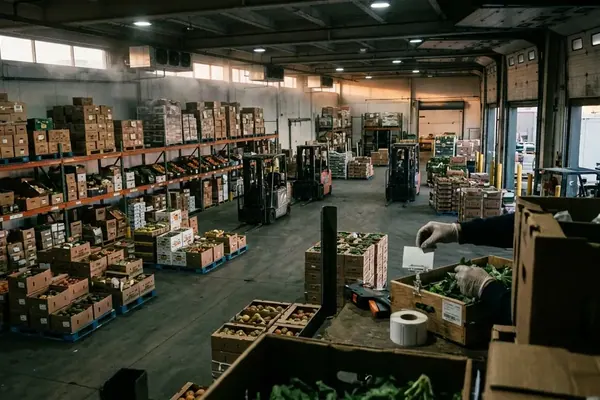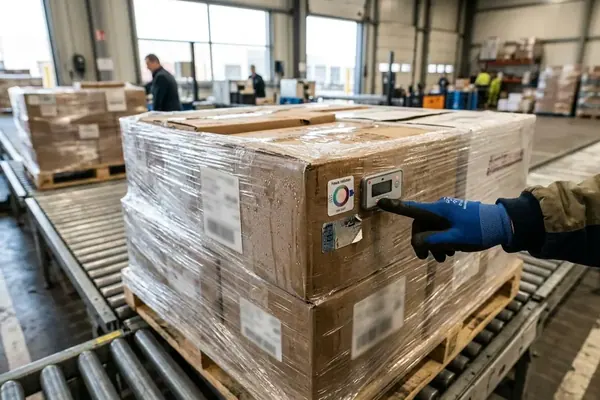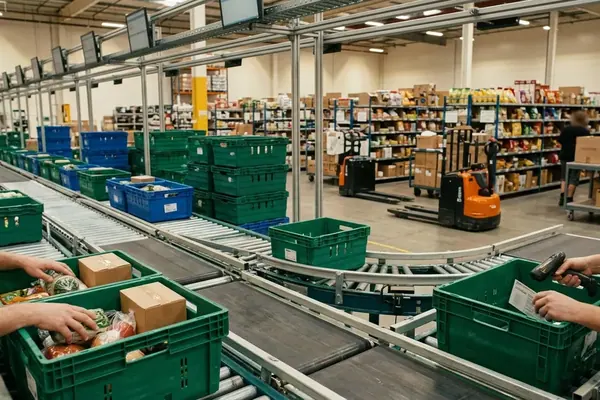
A plausible overnight sequence begins with a 12:30 to 2:00 a.m. bake finish. The bread cools on racks for 90 to 150 minutes. The delivery truck departs between 3:15 and 3:45 a.m., arriving at the metropolitan supermarket loading dock near 4:00 a.m. The retail life of the loaf is already burning down before the store opens.
The 4:00 AM Loading Dock Reality
Receiving, quantity checks, lot recording, and movement to the bread fixture add another 30 to 75 minutes to the timeline. Leaving wrapped loaves beside a warm dock or a running compressor during that interval encourages condensation and crust softening. Balancing the artisanal quality of a neighborhood bakehouse with the high-volume, efficiency-driven environment of a major grocery retailer requires precise timing.
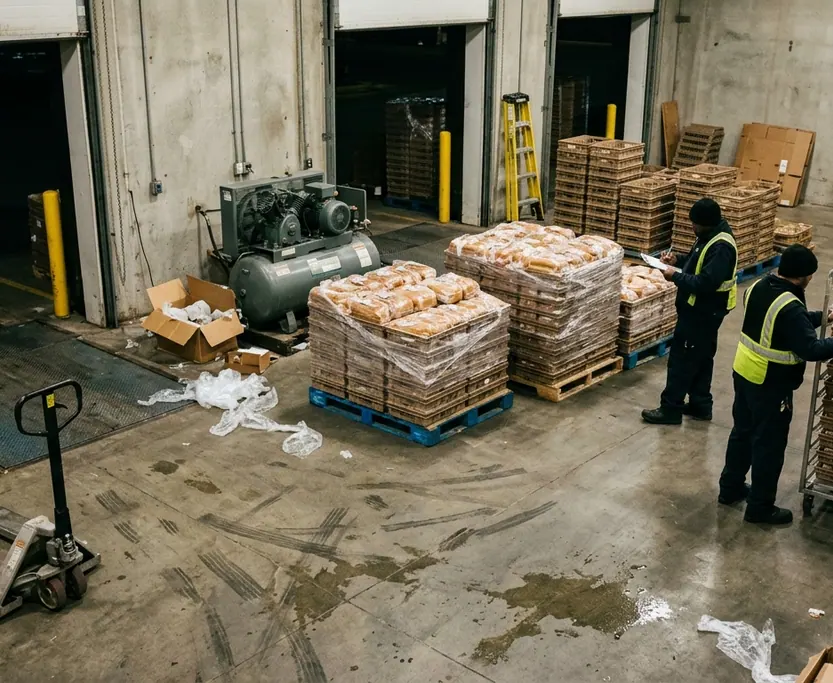
A loaf can carry a nearby bakery's brand yet arrive stale when it is packed warm, held through a missed receiving window, or left in the backroom until the following stocking round. In urban food logistics, the race against time dictates the final quality of preservative-free baked goods.
Executive Summary: The Local Bakery Partnership
Follow the product, the money, and the customer relationship to identify who actually benefits from local bakery and supermarket partnerships. Shoppers gain one-stop access to regional bread without making a separate trip to a specialty store. The supermarket gains a differentiated item that draws foot traffic and drives premium basket sizes.
Retailers isolate the financial impact of regional bread by comparing eight to twelve local-bread delivery days with matched weekdays lacking a delivery. They separate transactions containing the bakery SKU from storewide averages to measure the halo effect. Suppliers evaluate the arrangement by tracking order cutoffs, accepted units, rejected units, credits, and payment timing across at least four consecutive weekly invoice cycles.
Basket Halo Economics: Where invoice audits reveal the true cost of distribution, the financial reality follows: treating the initial purchase order as realized revenue ignores the friction of metropolitan logistics.The Logistics of Freshness and Shelf Life
Evaluate freshness from the end of baking forward. Once bread cools, starch molecules begin reorganizing into firmer structures. This process, commonly called retrogradation, accelerates during transit from a regional bakehouse to a supermarket shelf. For an unsliced lean sourdough held at ordinary room temperature, changes in crust and crumb are often noticeable during the first 24 to 72 hours after cooling. Enriched, seeded, sliced, or emulsifier-containing formulas behave differently under the same conditions.
Supermarkets manage inventory for highly perishable items through various temperature controls. Frozen bread is generally held near -18 degrees Celsius, whereas a supermarket cooler commonly operates around 1 to 5 degrees Celsius. Freezing greatly slows staling. Refrigerator-range storage promotes starch recrystallization and fails to restore time already lost before freezing.
A frozen or par-baked program may place better bread on the shelf than a nominally same-day delivery after a long congested route. Production method, elapsed time, temperature changes, and final-bake execution matter more than the word "local" alone.
Price Premiums and Supplier Leverage
The shelf price separates sharply from the bakery's proceeds. The consumer price must cover costly ingredients, hand shaping, long fermentation, packaging, metropolitan transport, retailer handling, shrink, and profit margins—a heavy burden for a single loaf. A useful invoice audit reconciles five fields for every delivery: units ordered, units accepted, damaged or short units, later credits, and the payment date.
Payment terms commonly shift cash collection weeks beyond the bake date even though flour, labor, and fuel were paid earlier. Regional bakeries offer wholesale discounts to secure shelf space, impacting their overall profitability despite increased production volume. Supermarkets use local brands as premium anchors. Bakeries risk overextending their production capacity to meet these demands.
Capacity Bottlenecks: Scaling for supermarket distribution stresses physical constraints, from mixer kilograms per batch and fermentation-rack positions to oven decks per bake, cooling-rack spaces, and loaves per delivery route.Margin and leverage change materially between a single-store arrangement, a regional chain contract, a consignment program, and an exclusive partnership. No universal wholesale discount credibly describes all local-bakery programs.
Identifying True Local Quality at the Shelf
Read the package using an evidence hierarchy. A printed bake or packed-on date provides the most useful information. A lot code becomes useful after staff explain its format. A best-by date offers the weakest signal, reflecting the retailer's shelf-life policy independently of the bread's actual age.
If a code resembles 24176, ask whether it is a Julian-style production code. In that convention, the first two digits identify the year and 176 the day of that year. Producers can use entirely different formats. Understanding these codes helps consumers navigate local food supply chains effectively.
Inspect the crust integrity and crumb texture through the packaging. Condensation droplets, a leathery, yielding crust, compressed scoring, or a visible air gap between crumb and crust indicate warm packaging, rough transit, or age. Differentiate between genuine local bakery partnerships and white-labeled commercial products. A label saying "distributed by" fails to establish where the loaf was mixed or baked.
Align Your Shopping with Delivery Schedules
Ask the supermarket's bakery manager two precise questions: which days the named bakery delivers and when those loaves normally reach the sales floor. Delivery timing dictates the quality of the product you bring home. Ask for both the truck window and the shelf window. A 5:00 to 6:00 a.m. delivery may fail to appear in the bread aisle until 6:30 to 8:00 a.m. after receiving checks and stocking.
Confirm the schedule on two successive delivery days. Holiday volume, traffic, rejected loads, and route resequencing can move arrival times by 30 to 90 minutes. Plan grocery trips to coincide with these specific delivery windows to ensure maximum freshness and shelf life at home. Time the purchase to capture the full value of the premium price paid for local bakery items.