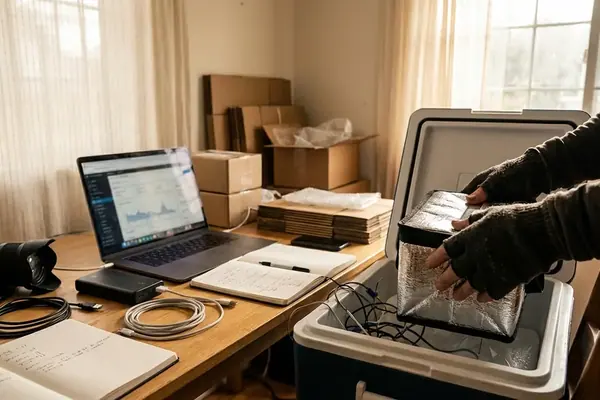
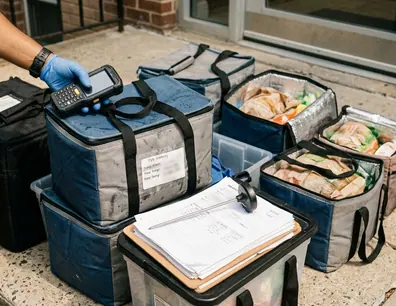
It's 94 degrees on a Tuesday afternoon, and the doorman just buzzed. Your Max Delivery order sits in a lobby corner: an insulated tote sweating with condensation, a bright "Temperature Controlled" sticker peeling slightly at the edge. You carry it upstairs and face the only question that matters before anything goes into the fridge — did the cold hold?
What's Inside
- The Reality of the Summer Delivery Handoff
- Separating Marketing Fluff from Cold-Chain Logistics
- Decoding Delivery Bag Language and Shelf Tags
- What Temperature Monitoring Actually Verifies
- Perform the 30-Second Arrival Audit
The Reality of the Summer Delivery Handoff
Picture the tote at your apartment entrance. The liner beads with condensation. The sticker reassures you in confident type. But the sticker describes intention, and your hands are holding the outcome.
Between the fulfillment center and your kitchen, a lot of clock runs. A realistic urban handoff might stack 10 to 20 minutes of curbside sorting, a 35 to 75 minute multi-stop route, and another 5 to 15 minutes in a lobby or on a stoop before anyone touches the buzzer. Each of those windows is a chance for warmth to creep in.
Here is the number that anchors everything else. For perishable groceries, the consumer threshold is 40°F or below. Federal food-safety guidance allows a maximum cumulative exposure of two hours above 40°F, and that budget shrinks to a single hour once ambient conditions climb past 90°F. On a day like this one, an hour is the whole allowance.
So the tension is plain. The packaging speaks the language of certainty. The last mile in a dense metropolis runs on stairwells, double-parked vans, and elevators that take their time. Reading the label tells you what a company hoped for. Reading the bag tells you what actually arrived.
Separating Marketing Fluff from Cold-Chain Logistics
Start by sorting the claims by what they actually disclose. "Guaranteed fresh," "climate-optimized," and "temperature controlled" share one revealing feature: none of them names a target temperature, a measurement point, or an allowable excursion. They are reassurance, not specification.
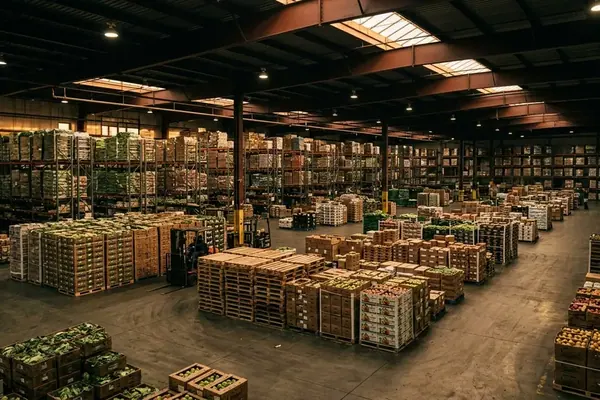
The real cold chain is made of physical parts, and those parts are worth knowing. A metropolitan setup may include a refrigerated staging room held at 33 to 40°F, a reflective or foam thermal liner, and phase-change packs placed above and beside the highest-risk items. This is the machinery that a marketing phrase gestures toward without describing.
Phase-change packs deserve a closer look, because their appearance hides their function. Water-based packs change phase near 32°F. Formulated phase-change packs can be engineered to transition closer to a chilled-food target such as 41°F. You cannot tell which one you're holding from the generic blue shell — the chemistry inside determines the behavior, not the color of the plastic.
What Changes at Checkout: A thin insulated tote that performs well on a 25-minute direct trip can produce a very different result after a 70-minute route followed by 12 minutes in direct sun. Route length, not the phrase on the bag, drives the outcome.The takeaway is unglamorous. Insulation slows heat transfer; it does not manufacture cold. The packs supply a finite reservoir of chill, and once that reservoir drains, the countdown starts regardless of how confident the sticker sounds.
Decoding Delivery Bag Language and Shelf Tags
Bag language splits cleanly into two categories once you know where to cut: storage instructions written for you, and workflow codes written for the operation.
Safety Requirement Versus Quality Suggestion
"Keep Refrigerated" is a safety instruction. It signals that the product belongs in controlled cold storage and should be treated as perishable, commonly corresponding to 40°F or below in consumer food-safety guidance. Treat it as a rule.
"Store in a Cool Place" is a quality suggestion. It carries no universal numerical ceiling and may simply mean a dry cupboard away from an oven or a sunny window. Confusing the two is how people either waste refrigerator space or, worse, leave something perishable on the counter.
The Codes That Aren't For You
Third-party services layer proprietary labels on top of these standard tags — scan codes, staging tags, compliance stickers. They document internal events, and the events are narrower than they look. A scan at 2:10 p.m. into a refrigerated staging zone and a driver pickup at 2:38 p.m. record two moments. They leave the temperature during the route between them unmeasured, unless a sensor actually travels with your order.
Routing math compounds the gap. On a six-stop route, the first tote loaded may sit in the vehicle through every later stop, even when the app shows you only the final eight-minute approach. The interface flatters the last leg and hides the first hour.
Key Takeaway: A "Keep Refrigerated" tag tells you how a product must be treated; a scan-and-pickup timestamp tells you when it moved, not how cold it stayed. Only a sensor riding inside the bag closes that distance.What Temperature Monitoring Actually Verifies
Assess any monitoring claim by asking two questions: where is the sensor, and how often does it record? The answers define exactly what the data proves — and what it quietly leaves out.
Commercial distributors use active data loggers, often configured to record at intervals such as 1, 5, or 15 minutes. A logger attached to a pallet or mounted in a staging room verifies conditions near that device. That's genuine information, but its scope ends at the sensor's location.
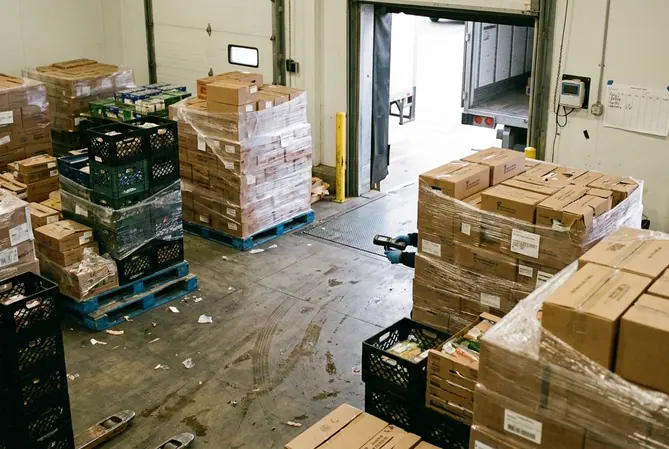
The interval matters more than most people expect. A 15-minute recording cadence can miss a brief loading-dock spike that begins and ends between two readings. The record looks clean because the thermometer simply wasn't looking during the moment that counted.
Consider a logger reporting 37°F at dispatch. That reading verifies the sensor's spot at that time. It does not verify the temperature of every product loaded into every delivery bag afterward. Where a facility's monitoring report reads as accurate, it can still be true that an individual order warmed during curb staging, vehicle loading, a multi-stop route, or an unattended handoff in your building — all beyond the logger's reach.
Geometry finishes the argument. Direct sun can push a dark stoop or a vehicle surface well above the reported air temperature. Once a tote leaves active refrigeration, its only protection is the stored cold in the food and packs plus the liner's resistance to heat transfer. Neither of those shows up on a facility dashboard.
Before You Trust the Sticker: A "monitored facility" badge describes the warehouse, not your bag. During peak delivery hours or a heat wave, the safe-at-dispatch reading and the temperature at your door can be two very different numbers. Verify at arrival, not at reassurance.Perform the 30-Second Arrival Audit
The moment the tote reaches your counter, you have a short window to gather evidence that actually changes a keep-or-discard decision. Skip the promotional stickers. Open the cold tote first and work through the physical signals in order.
The First 30 Seconds
- Check the gel packs. Conventional water-based packs should still hold a solid core. Fully liquid packs are a warning sign, though not a verdict on their own.
- Inspect the frozen items. Hard product or visible ice crystals inside the package support continued freezing. Soft, slumped packages do not.
- Scan the tote floor. Liquid pooling inside the liner tells you something thawed or leaked during transit.
Confirm With a Probe
To avoid puncturing packaging, press a thermometer probe between two chilled packages for roughly 15 to 20 seconds and wait for the instrument's stabilization cue. A reading of 40°F or below supports refrigerating the order right away. This is the step that converts a hunch into a measurement.
Read the Thaw-and-Refreeze Signs
Exterior frost bands, clumped frozen vegetables, distorted cartons, or refrozen drips point to a thaw-and-refreeze cycle. Draw the distinction carefully: ice crystals inside a frozen package support continued freezing, while frost only on the exterior may just be humid air condensing and freezing during handling. Frozen food that still holds ice crystals or measures 40°F or below can generally be refrozen, though quality may slip.
When Touch Isn't Enough: Pack texture is a screening tool, not a universal test. Some phase-change packs are engineered to feel liquid near refrigerator temperature, and a cold exterior never proves the center of a dense item stayed in range. A pristine liner and a still-cold bottle can sit right next to unsafe raw fish if that fish was packed beside a hot prepared meal or against the tote's sun-facing wall.The bag markets the intention. The gel pack, the ice crystal, and the probe reading report the outcome. Trust the outcome.
— Elena Ibarra, Culinary Sourcing Strategist
Run this audit on your next hot-afternoon order the second it lands: open the cold tote, press a probe between two packages, and read it against 40°F. If a perishable item sits above that line and you can't establish how long it was exposed, photograph the reading and the packaging, contact the delivery service with those images, and do not taste the food to test it. Consult the federal safe temperature thresholds to confirm the 40°F line before you decide, then log that vendor's summer performance so your next order goes to the service that actually keeps the cold.