A sudden cloudburst over Manhattan or Brooklyn changes the math of local food logistics within minutes. When your grocery delivery window slips by an hour during a downpour, street-level vehicular traffic usually takes the blame. In practice, the breakdown starts indoors long before a rider reaches your avenue, driven by how urban fulfillment networks absorb abrupt weather shifts.
What Actually Causes Wet-Weather Grocery Delays in NYC
Wet-weather grocery delays stem primarily from an inbound order surge colliding with shrinking two-wheeled courier supply and staging congestion inside dark stores. Vehicular bumper-to-bumper gridlock on the avenues plays a secondary role. This dynamic reflects urban last-mile weather elasticity: the linked response of incoming customer orders, in-store picking throughput, and available courier capacity when precipitation begins.
This operational diagnosis applies specifically to short-radius delivery services dispatched by two-wheeled couriers, whereas scheduled van routes and orders picked from full-size supermarkets operate under different capacity constraints. In a micro-fulfillment network, diagnosing where a delay originates requires separating three distinct operational intervals:
- Order acceptance to completion of packing: A growing interval here points directly to a backlog in the in-store picking queue.
- Completion of packing to courier collection: A widening gap at this stage reveals dispatch friction, rider scarcity, or staging-area saturation.
- Courier collection to doorstep arrival: Expansion in this final segment reflects street-level routing friction and building-access time.
Looking only at a late doorstep timestamp hides which link actually failed. Across an urban network, wet-weather breakdowns follow a predictable three-part sequence: algorithmic batching backlogs in the queue, staging-area cold chain gridlock inside the facility, and courier mode-shift refusal on the street.
Inside the Fulfillment Center: Order Surges and Staging Gridlock
Following an order through the building explains why adding labor during a rainstorm fails to clear the queue. Sudden precipitation redirects nearby pedestrians who would ordinarily walk into a local market into the exact same digital delivery catchment. Inbound order volume spikes immediately, while internal shelf frontage and dispatch floor area remain fixed.
The Aisle-Access Ceiling
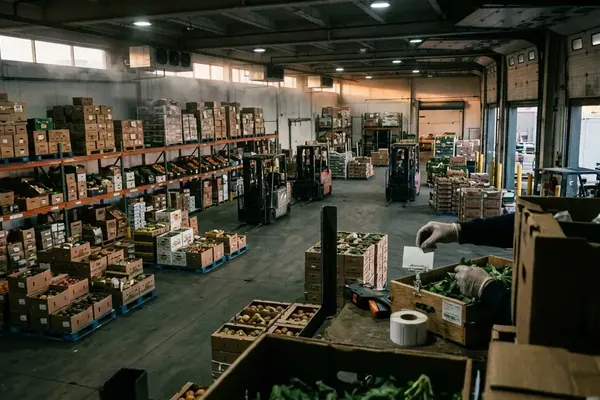
Dark stores operate with tight footprints and narrow, fixed aisle widths. Putting extra pickers on the floor helps only up to the point where workers begin competing for simultaneous access to the same high-velocity shelf faces, passing lanes, and packing stations. Once an aisle reaches physical congestion, additional staff slow down tote assembly.
Multi-Zone Staging Saturation
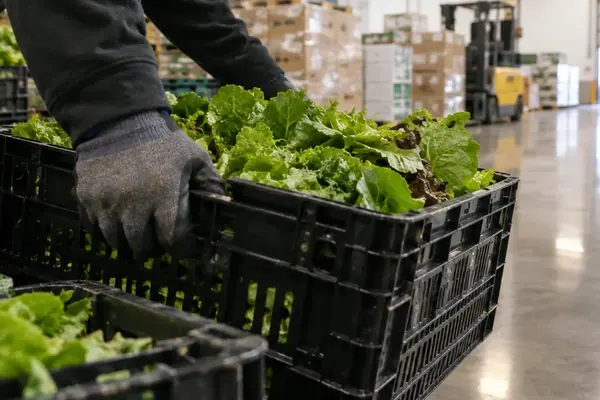
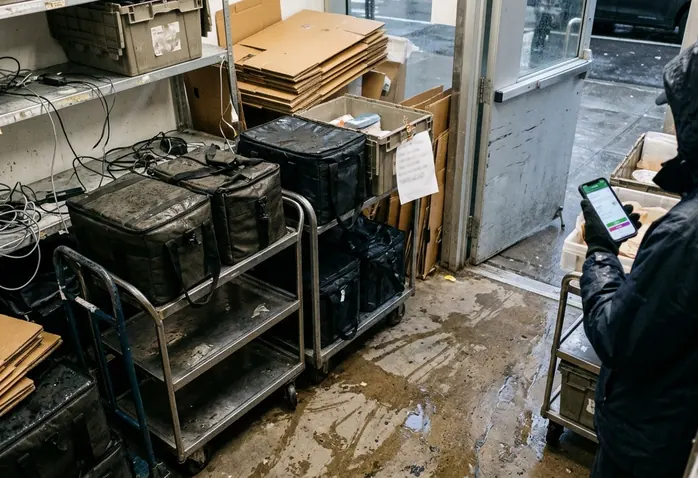
Even when pickers keep pace, completed orders must wait in outbound holding until a rider arrives. A single grocery basket containing dry pasta, Greek yogurt, and a pint of ice cream splits into three separate staging requirements: ambient racks, chilled coolers, and frozen chests. When outbound couriers are delayed, uncollected totes occupy holding positions across all three temperature zones at once.
An empty ambient shelf cannot relieve a jammed walk-in chiller. Once refrigerated holding space reaches capacity, floor staff have nowhere to stage newly packed bags. Packing halts, and the dispatch software must push back promised customer delivery windows across the zone.
Cold Chain Staging Lock: One uncollected multi-temperature grocery order ties up ambient, chilled, and frozen holding bays simultaneously, halting fresh order assembly before another courier even reaches the dispatch door.
Street-Level Dispatch: Courier Drop-Off and Micro-Mobility Friction
Outside the facility, delivery performance separates into road conditions and rider availability. Legal e-bikes can utilize protected NYC bike lanes to bypass the vehicular queues that stall cars and trucks; mopeds are prohibited from bike lanes and face standard lane congestion alongside automobiles. Regardless of vehicle class, heavy rain exposes two-wheeled riders to slick metal utility plates, painted crosswalk markings, pooled curbside water, and degraded visibility—route-level hazards that standard automotive traffic maps fail to capture.
| Operational Factor | Dry Baseline Operation | Wet-Weather Shift |
|---|---|---|
| Fleet Supply (Mode-Shift Refusal) | Steady login rates across active two-wheeled delivery zones. | Independent riders decline hazardous trips or log off entirely; operators cannot switch to cars they do not own. |
| Bridge and Interborough Routing | Direct routing across exposed bridge bike paths and roadways. | Voluntary rider avoidance of high-wind spans and slick steel grates, even without an official bridge closure. |
| Order Batching and Building Access | Single-address dispatches or tight two-stop runs with quick curb handoffs. | Algorithms bundle multiple drops per rider; service entrances and wet-gear protocols lengthen handoff times. |
When independent couriers log off during a squall, the network experiences mode-shift refusal: riders decline unsafe conditions and pause work, as an available automobile cannot be assumed. With active assignments outnumbering remaining riders, routing algorithms group more customer drop-offs into single multi-stop trips.
Batching carries a heavy urban time penalty. A two-address batch requires two complete lock-up, concierge check-in, service-elevator, and apartment handoff cycles—even when both buildings sit on adjacent blocks. Shedding wet rain gear or waiting for a service entrance slows each stop, compounding the delay for the second customer in the batch.
Which Forecast Conditions Break Delivery Windows—and How to Book
Timing your order around NYC weather elasticity requires reading both the hourly meteorological forecast and the checkout screen before paying. Two forecast profiles pose the highest disruption risk to urban grocery fulfillment:
- Pre-Commute Onset: Rain arriving 30 to 60 minutes before the 16:00 to 19:00 weekday evening peak. Using this window as a planning scenario shows why networks stall: newly triggered rain orders flood the queue before the store has cleared its baseline afternoon volume, overlapping peak dinner demand with dropping courier availability.
- Wind-Driven Rain on Exposed Corridors: Sustained gusts paired with precipitation along river crossings and open avenues. Even when bridges remain officially open to traffic, high winds deter two-wheeled riders from accepting interborough or waterfront dispatches.
Reading App Warning Signals
Before submitting payment, audit the app interface for operational strain. Disappearing express delivery tiers confirm that the platform has pulled back its advertised service options to manage queue depth, though that change alone does not prove how many riders have logged off. Similarly, automated substitution prompts during checkout reflect item-level inventory availability on the shelf, and do not independently establish high shelf turnover, a picking backlog, or staging saturation.
Pay closest attention to widened two-hour arrival windows. If you need ingredients on the counter to start cooking dinner by 19:00, an advertised 18:00 to 20:00 delivery window leaves zero dependable margin—the promise is already incompatible with your meal deadline before wet-weather friction even enters the equation.
Pre-Rain Booking Rule: Never book a new on-demand grocery order once rain begins falling between 16:00 and 20:00; lock in a 07:00 to 10:00 morning drop-off the night before whenever precipitation is in the forecast.
Use the morning slot as a conservative household buffer: when rain is forecast, reserve the 07:00 to 10:00 drop-off the night before rather than waiting for the evening order surge. Before paying, check that the full advertised arrival window falls before your cooking deadline.