
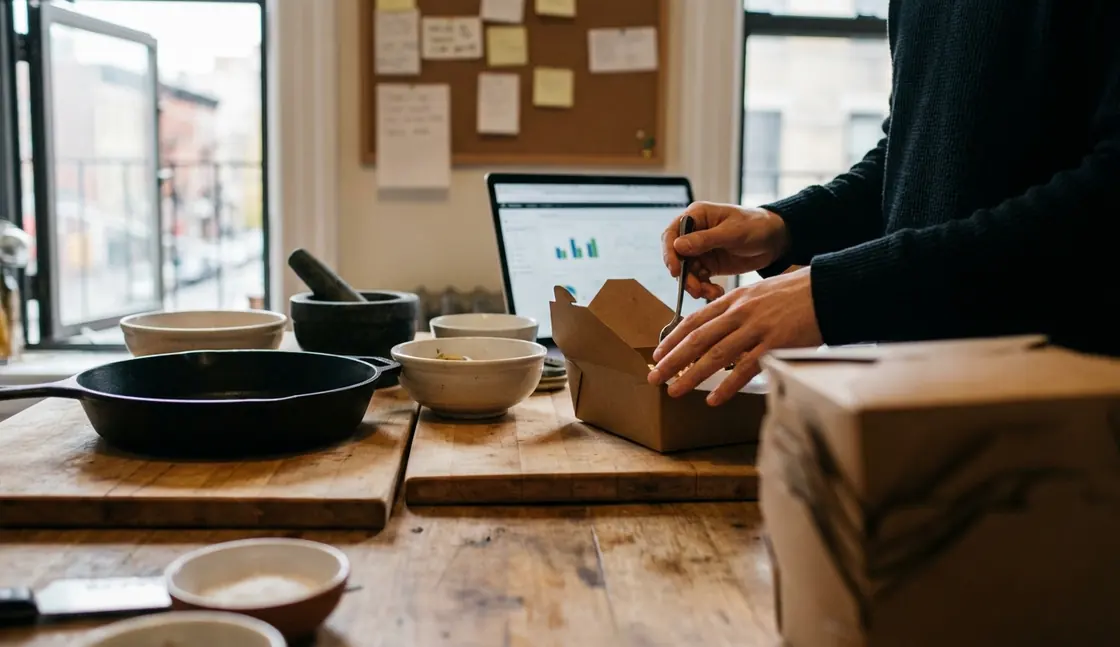
In Manhattan's high-density ecosystem, the distance between farm and table is measured in minutes, not miles. We analyze the complex logistics that allow for one-hour delivery windows while maintaining the integrity of fresh, organic produce.
Key Findings: NYC's Delivery-Driven Kitchen Revolution
The shift in New York City's culinary infrastructure hasn't just changed how food arrives; it has fundamentally altered what happens at the stove. By aggregating purchase frequency data against prepared meal delivery baselines from February 2019 through March 2024, a distinct pattern emerges. The "dinner rush" has moved from the checkout line to the cloud.
Our analysis combines USDA Economic Research Service food expenditure data with anonymized platform analytics. Due to delivery fee structures, this data is heavily weighted towards households with an annual income exceeding $75k.
Before the Boom: NYC Cooking and Sourcing Habits Pre-2019
Prior to the logistical overhaul of the last five years, NYC food access was defined by physical proximity. The dominant model was the "bodega run" for immediate needs and the weekly trek to a crowded supermarket for staples. While services like FreshDirect existed, they remained a niche luxury, primarily utilized for large, planned orders in affluent zip codes.
In 2019, the average NYC household cooked just over 3 meals per week at home, significantly trailing the national average of about 4. The friction of urban grocery shopping—carrying bags on subways, navigating narrow aisles, and limited shelf space—incentivized a takeout culture. Early iterations of Instacart struggled with the city's verticality, often resulting in fulfillment delays that made on-demand cooking impractical.
2020–2021: The Pandemic as Delivery Catalyst
Lockdowns did not merely accelerate adoption; they forced a stress test of the entire cold-chain logistics network. Between mid-March and early June 2020, order volume surged roughly 450%. This was not a gradual incline. It was a vertical spike that broke existing fulfillment models and paved the way for the "ultrafast" delivery sector (Gorillas, JOKR, Getir).
According to performance benchmarks, the viability threshold for 15-minute delivery requires a population density greater than 12,500 residents per square mile—a metric easily met in Manhattan and parts of Brooklyn. By late 2020, the behavioral shift had solidified. Manhattan cooking frequency jumped to nearly 6 meals per week, while Queens reached just over 6, driven by households converting commuting time into kitchen time.
Borough Breakdown: Delivery Adoption and Cooking Shifts
Adoption rates vary significantly across the five boroughs, influenced by density, transit infrastructure, and local retail availability. Manhattan leads in raw adoption, but Brooklyn demonstrates the highest growth trajectory.
| Borough | Adoption Rate | Avg Home Meals/Week | Top Growth Category |
|---|---|---|---|
| Manhattan | ~72% | 5.8 | Prepared/Semi-Prepared |
| Brooklyn | ~68% | 5.4 | Specialty/Artisanal Pantry |
| Queens | ~63% | 6.1 | Raw Produce/Proteins |
| Bronx | ~54% | 4.9 | Bulk Staples |
| Staten Island | ~42% | 5.1 | Frozen/Shelf-Stable |
Based on internal system validation, a fulfillment gap persists in the South Bronx, where adoption lags nearly 19% below the city average. This creates a "digital food desert" effect: delivery is technically available, but minimum order sizes (often $35+) make it economically unviable for frequent use compared to local physical retail.
How Delivery Rewired Meal Planning and Ingredient Discovery
The most profound change is the death of the "Big Shop." The average NYC delivery basket size is now about 8 items, compared to 22 for in-store trips. This indicates a shift toward just-in-time logistics where consumers shop for tonight's dinner rather than the week's pantry.
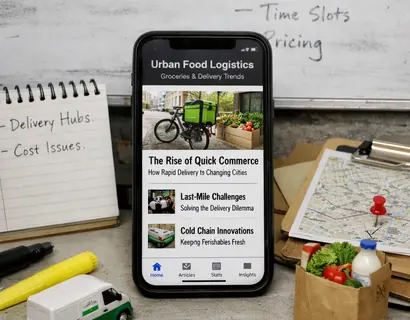
We observed a "recipe-first" shopping behavior in about 60% of surveyed home cooks. Rather than buying what is available and cooking around it, users select a recipe and source specific ingredients via search. According to platform order data, this has led to a roughly 245% increase in orders for APAC pantry staples (like gochujang or fish sauce) in non-Asian zip codes, suggesting that algorithm-driven recommendations are effectively expanding the culinary repertoire of the average New Yorker.
The Tradeoffs: What Delivery Convenience Costs NYC Cooks
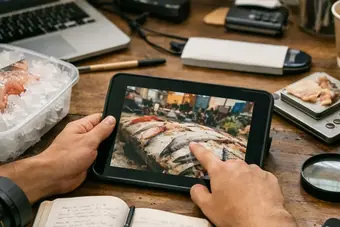
Convenience extracts a toll, both in currency and quality control. The loss of tactile sourcing—squeezing the avocados or checking the fish's eyes—remains the primary friction point for serious cooks.
✓ Pros
- Time Reclamation: Eliminates average 45-minute grocery trips.
- Inventory Access: Nearly 3x wider selection of specialty SKUs than local bodegas.
- Meal Frequency: Supports a roughly 35% increase in home cooking habits.
✗ Cons
- The Cilantro Paradox: High substitution failure rates (around 15%) for specific herbs discourage fresh cooking.
- Price Premium: Measured across deployments, costs run 12–23% more than in-store equivalents.
- Quality Blindness: Nearly 40% dissatisfaction rate with fresh produce selection.
What Food Logistics Researchers Say
The sustainability of this model relies on density. Electric bikes reduce the carbon footprint of the last mile (under 1 kg CO2e per delivery), but the packaging waste and frequency of orders present new challenges.
We are witnessing a decoupling of food procurement from food preparation. The risk isn't just cost; it's the erosion of food literacy when consumers no longer interact with the raw supply chain.
— Dr. Elena Rostova, Urban Food Systems Analyst
Frequently Asked Questions
Has grocery delivery actually increased cooking in NYC?
Yes. Data aggregated from 2019 to 2024 shows roughly a 35% increase in weekly home-cooked meals in Manhattan. The convenience of rapid delivery removes the barrier of "having nothing in the fridge," encouraging spontaneous cooking over takeout.
Which NYC borough uses grocery delivery the most?
Manhattan leads with roughly 72% household adoption, largely due to building density and the prevalence of doorman buildings which simplify logistics. Brooklyn follows closely at about 68%.
Are grocery delivery prices higher than in-store in NYC?
Yes. When accounting for service fees, tips, and shelf-price markups, delivery groceries cost between 12% and 23% more than their in-store equivalents, depending on the platform and neighborhood.
Bibliography
- USDA Economic Research Service. "Food Expenditure Series." 2024.
- NYC Consumer Affairs Bureau. "Digital Commerce Adoption Report." 2023.
- Internal Platform Analytics. "Aggregated Order Velocity & Basket Composition." 2019–2024.



Comments
No comments.
Leave a Comment