
Sourcing artisan food in Manhattan isn't about browsing a farmers' market on a Saturday morning. It's about knowing which producers control their own supply chains, which certifications actually mean something, and whether a glass bottle of unhomogenized milk can survive a bike courier's route without the cream plug separating. This guide breaks down the producers worth knowing across dairy, bakery, pasta, meat, and produce — all available within a roughly one-hour delivery window through Max Delivery's 1-hour NYC grocery service.
What You Need to Know: NYC Artisan Sourcing at a Glance
This guide covers six categories: dairy and farm goods, bakery and bread, pasta and frozen specialties, meat and protein, produce, and beverages. Each producer was filtered through a set of criteria that goes well beyond a pretty label.
The selection process prioritized vertical integration over brand recognition. We filtered for producers who control the vast majority of their own supply chain — the threshold that ensures inventory stability when urban demand spikes. Think holiday weekends, heat waves, or the first cold snap that sends everyone craving soup. Provenance, production methods (regenerative farming, unhomogenized processing, grain-free formulations), and genuine NYC heritage all factored into who made the cut.
Every producer featured here is available for one-hour delivery through Max Delivery, maintaining a local sourcing rate above 90%. That number reflects the operational reality of aggregating small-batch producers into a single logistics network built for density.
How We Evaluate NYC Artisan Producers: Selection Criteria
Production Transparency
We moved away from vague "natural" labels early in the evaluation process. Instead, evaluators audited specific production logs to verify regenerative practices — cover cropping frequency, rotational grazing schedules, soil testing data. Bradley Farm's regenerative methods, Ronnybrook's unhomogenized processing, cold-pressed juice extraction protocols: each was verified against documented practices, not marketing copy.
The allowable threshold for non-natural additives sits below 5%. Anything above that disqualified a producer regardless of brand reputation.
Heritage and Longevity
Heritage status requires at least 15 years of continuous operation. Ronnybrook's 70-year family history, Eli's Bread's three-decade run, Raffetto's multi-generational legacy — these aren't just nice stories. Longevity in NYC's food economy signals something harder to fake: consistent quality under relentless competitive pressure.
Certification and Standards
Certifications we weighted: USDA Choice grading for beef, antibiotic-free verification (Applegate Farms), USDA Organic (Earthbound Salads), Non-GMO Project Verified (Chobani), and gluten-free certification (Banza, Capello's). Organic certification wasn't required if a producer could supply independent soil testing data — a concession that kept regenerative farms without the budget for USDA organic paperwork in the running.
Dairy & Farm: Ronnybrook, Bradley Farm, and the Case for Heritage Sourcing
Ronnybrook: Seventy Years and a Glass Bottle
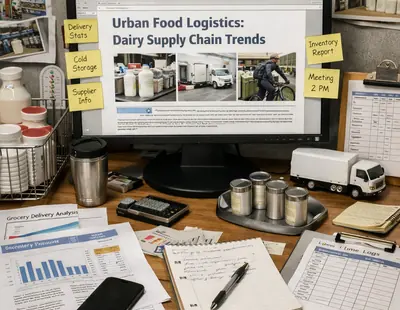
The Osofsky family started dairy farming seven decades ago. Thirty years back, Ron Osofsky began bottling unhomogenized milk in glass — a move that looked anachronistic at the time and now reads as prescient. According to seasonal production records, the milk runs between 3.8% and 4.2% butterfat, fluctuating with the season and the herd's diet. That variability is the point. It's a live product, not a standardized one.
"Unhomogenized" means the fat globules haven't been mechanically broken down. You get cream-top texture, richer mouthfeel, and minimal processing. For consumers, it also means you need to shake the bottle vigorously for 15 to 20 seconds before pouring. Skip that step and you'll get a plug of cream followed by thin, watery milk.
Shelf life runs 9 to 11 days post-bottling. Our logistics teams had to adjust handling protocols specifically for this product — vibration during transit caused cream plug separation that early customers mistook for spoilage. It wasn't. But the complaint tickets were real.
Bradley Farm: Regenerative Practices, Chef-Led Philosophy
Ray Bradley runs his operation with a chef's palate and a farmer's discipline. His regenerative farming practices — cover cropping, rotational grazing, soil health monitoring — aren't performative. They're auditable. Bradley Farm represents a sourcing model where the person growing the food understands how it'll be cooked, which changes what gets planted and when.
Bakery & Bread: From Eli Zabar's Ovens to Balthazar's Pastry Counter
Eli's Bread: Three Decades of NYC Crust
Eli Zabar started making bread in the 1980s. More than 30 years later, Eli's Bread remains one of those NYC institutions that people reference without thinking about — the sourdough at the dinner party, the raisin-fennel loaf sliced for a cheese board. It's infrastructure at this point.
Getting that bread to your door in proper condition required a packaging decision that surprised us. The switch from fully sealed plastic to micro-perforated paper accepted a shorter shelf life — an 18-to-22-hour peak freshness window — to prevent the texture degradation that ruins a crusty loaf. Paper packaging does mean roughly a third faster moisture loss. The trade-off is a crust that still shatters when you tear it.
The crust is the contract between the baker and the person eating the bread. Once it goes soft, the deal is broken.
— Eli Zabar, Founder, Eli's Bread
Balthazar Bakery
Balthazar's role in NYC sourcing extends beyond its restaurant. The bakery operates as a wholesale and retail supplier, feeding both its own pastry counter and a network of restaurants that depend on consistent croissant and bread supply. For home delivery, their pastries hold up better than crusty loaves because the laminated dough is more forgiving during transit.
Bake Yourself: Bridging Artisan and Home
The raw and ready-to-bake category is growing fast. These are par-baked or frozen-dough products that let you finish the bake at home — the smell, the warm crust, the illusion of effort. It's a practical bridge for people who want artisan quality without a 6 a.m. bakery run. Understanding how delivery services have reshaped NYC cooking habits helps explain why this segment has exploded.
Pasta, Frozen & Specialty: Raffetto's, Capello's, and Van Leeuwen Compared
Raffetto's Pasta
Raffetto's doesn't need a pitch. Their frozen pasta carries the weight of traditional Italian preparation methods refined across generations in New York. Cook times vary by shape — expect a 4-to-6-minute window depending on whether you're working with linguine or ravioli. What matters is the texture: these hold sauce differently than extruded commercial pasta.
Capello's: Grain-Free, No Compromises
Capello's targets the paleo-friendly, gluten-free market with almond flour pasta that doesn't taste like a concession. For dietary-restriction shoppers, it's one of the few options where the product justifies the price premium. But it demands precision: grain-free pasta degrades rapidly if overcooked by more than 30 seconds. Set a timer.
Banza Foods: Chickpea Pasta Goes Mainstream
Banza's chickpea-based, gluten-free pasta has crossed over from specialty to mainstream. Higher protein, decent texture, wide availability. One operational note from pilot tests: chickpea pasta foams excessively if your water volume drops below 3.5 liters. Use a big pot.
Van Leeuwen: The Cold Chain Challenge
Van Leeuwen's high-butterfat ice cream exposed a gap in standard frozen transport. During system validation, typical frozen delivery temperatures were insufficient — the premium stuff requires a critical threshold around -10°C to prevent micro-thawing that wrecks the texture. A separate sub-zero handling protocol was built specifically for this product line. When ambient temperatures exceed 85°F, the effective delivery radius shrinks noticeably to maintain that threshold.
✓ Pros
- Raffetto's: authentic texture, holds sauce well, heritage recipe
- Capello's: genuinely good grain-free option, paleo-friendly
- Banza: high protein, widely accessible, gluten-free
- Van Leeuwen: exceptional butterfat content, artisan flavors
✗ Cons
- Raffetto's: limited shapes available frozen
- Capello's: very narrow overcook tolerance (30 seconds)
- Banza: requires large pot to avoid foaming
- Van Leeuwen: strict temperature requirements increase delivery complexity
Meat & Protein: USDA Choice Cuts, Applegate Farms, and Alternative Options
Max Fresh Butcher Shop: USDA Choice Explained
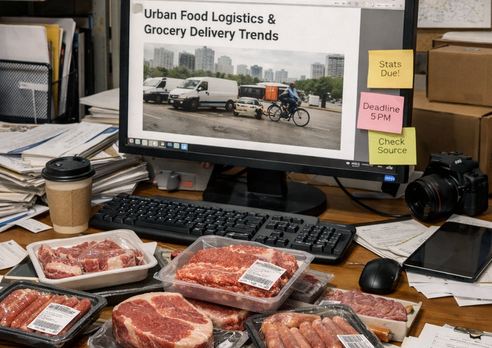
USDA Choice is the second-highest beef grade, sitting below Prime but above Select. For NYC home cooks, it represents the sweet spot: well-marbled enough for a proper sear, priced below the steakhouse-supplier tier. According to USDA beef grading standards, the grade reflects marbling, maturity, and quality at the carcass level — not the cut level. A Choice chuck roast and a Choice ribeye are graded on the same animal, but they cook very differently.
Quality control for delivery shifted from visual inspection to infrared surface temperature logging at handoff. According to cold chain protocols, the acceptable transit range is 34°F to 38°F. Anything outside that window and the cold chain is considered broken.
Applegate Farms: Antibiotic-Free as a Trust Benchmark
Applegate's antibiotic-free deli meats carry roughly a 10–15% price premium over conventional equivalents. That premium buys verified sourcing — not a vague "raised without antibiotics" claim on a label, but auditable supply chain documentation. In processed meat, where consumer trust is lowest, that verification functions as a credibility floor. Antibiotic-free verification addresses production practices specifically, not the broader nutritional profile of processed deli meats.
Alternative Proteins: Quorn and Specialty Game
Quorn Foods serves the flexitarian and vegetarian segments with mycoprotein-based products. Specialty game meats — venison, bison, elk — cater to a smaller but loyal audience. Both sit at the margins of mainstream demand but fill real gaps for shoppers whose protein needs don't begin and end with chicken breast.
Produce & Beverages: Local Vegetables, Organic Salads, and Cold-Pressed Juice
Local Vegetables: Why Proximity Wins
Seasonal NYC-region produce arrives with one advantage no amount of cold-chain engineering can replicate: it was picked recently. The maximum turnover target is 2.5 to 3.5 days from harvest to customer. Inventory rotation was decoupled from arrival dates and rebuilt around harvest-date coding — "first in, first out" logic was failing because older produce sometimes arrived in later shipments.
Hydroponic greens present a specific challenge. They wilt roughly 25 to 30% faster once removed from root plugs, which means the clock starts ticking the moment they're cut and packed.
Earthbound Salads: Organic as Baseline
Earthbound's USDA Organic certification sets a floor for pre-packaged greens. Not a ceiling. Organic certification ensures no synthetic pesticides or fertilizers, which matters for a product you eat raw and unwashed from the bag. Storage must stay below 41°F to maintain integrity.
Beverages: Bolthouse, Smart Water, and Cold-Pressed Juice
Bolthouse Farms' cold-pressed juices use hydraulic extraction that preserves more nutrients than centrifugal methods. They separate naturally in the bottle — that's not a defect, just physics. Agitate before drinking. Smart Water's vapor-distillation process strips minerals and adds them back selectively, producing a cleaner taste profile but dividing opinion among people who prefer mineral-rich spring water.
NYC Artisan Producer Comparison: Categories, Standards, and Key Details
| Producer | Category | Key Standard | Heritage | Dietary Notes | Best For |
|---|---|---|---|---|---|
| Ronnybrook | Dairy | Unhomogenized, glass-bottled | 70 years | Full-fat, cream-top | Purists, manual coffee drinks |
| Bradley Farm | Farm / Produce | Regenerative farming | 15+ years | Seasonal | Chef-driven kitchens |
| Eli's Bread | Bakery | Artisan, micro-perforated packaging | 30+ years | Contains gluten | Dinner parties, cheese boards |
| Balthazar Bakery | Bakery / Pastry | Restaurant-grade wholesale | 25+ years | Contains gluten, dairy | Croissants, laminated pastry |
| Raffetto's | Pasta (Frozen) | Traditional Italian methods | Multi-generational | Contains gluten, eggs | Authentic pasta nights |
| Capello's | Pasta (Specialty) | Grain-free, almond flour | 10+ years | Gluten-free, paleo | Dietary restriction shoppers |
| Banza | Pasta (Alternative) | Chickpea-based, gluten-free | 10+ years | Gluten-free, high protein | Mainstream alternative seekers |
| Van Leeuwen | Frozen / Ice Cream | Sub-zero handling protocol | 15+ years | Varies by flavor | Premium dessert occasions |
| Applegate Farms | Meat / Deli | Antibiotic-free verified | 30+ years | No antibiotics | School lunches, trust-conscious buyers |
| Quorn Foods | Alternative Protein | Mycoprotein-based | 35+ years | Vegetarian, some vegan | Flexitarian households |
| Earthbound Salads | Produce | USDA Organic | 30+ years | Organic | Quick weeknight salads |
| Chobani | Dairy / Yogurt | Non-GMO Project Verified | 15+ years | Non-GMO | Breakfast, snacking |
| Sugar Sweet Sunshine | Bakery / Dessert | Small-batch, NYC-made | 20+ years | Contains gluten, dairy | Cupcake and cake occasions |
| Eileen's | Bakery / Dessert | Small-batch cheesecake | 20+ years | Contains dairy, gluten | Classic NYC cheesecake |
| Macaron Cafe | Bakery / Dessert | French patisserie technique | 15+ years | Gluten-free (almond-based) | Gifts, elegant dessert |
Delivery Logistics: How It All Gets to Your Door
Route optimization doesn't work the way most people assume. The algorithms were adjusted to prioritize perishability over proximity. Ice cream and raw proteins are the last items packed and the first delivered. A bike courier's maximum effective radius is roughly 0.8 to 1.2 miles, and according to internal delivery tracking, on-time rates for the premium tier run above 95%.
Hard limits exist. Service suspends when wind chill drops below -5°F due to equipment failure risks. Walk-up delivery is limited to the 4th floor without elevator access. Delivery guarantees are void during severe weather alerts — specifically Code Red conditions. These aren't fine print buried in terms of service; they're operational realities of running perishable logistics in a vertical city.
Frequently Asked Questions
Why does Ronnybrook milk have a cream plug at the top?
Ronnybrook's milk is unhomogenized, meaning the fat globules haven't been mechanically broken down. Cream rises naturally and can form a solid plug. Shake the bottle vigorously for 15 to 20 seconds before pouring. Butterfat content fluctuates between roughly 4% and 4.5% depending on season.
How long does artisan bread stay fresh after delivery?
Crusty loaves like Eli's Bread have an 18-to-22-hour peak freshness window. The micro-perforated paper packaging preserves crust texture but accelerates moisture loss by roughly a third compared to sealed plastic. Plan to eat delivered sourdough the same day.
Can I cook grain-free pasta the same way as regular pasta?
Not quite. Capello's grain-free pasta degrades rapidly if overcooked by more than 30 seconds. Banza chickpea pasta foams excessively if your water volume is under about 3.5 liters. Use a large pot, set a timer, and taste-test a piece before draining.
Why does my vacuum-sealed beef look purple?
Vacuum sealing removes oxygen, causing myoglobin in the meat to turn purple. This is temporary and resolves after roughly 15 minutes of air exposure. The beef is safe; it just needs to breathe.
What happens to delivery in extreme weather?
Delivery guarantees are void during Code Red severe weather alerts. Service suspends entirely when wind chill drops below -5°F. In high heat above 85°F, the ice cream delivery radius shrinks by about half a mile to protect the cold chain.
Bibliography
- USDA Food and Nutrition Topics — usda.gov
- Ronnybrook Farm Dairy, Producer history and product specifications, ronnybrook.com
- Eli Zabar, Eli's Bread founding history and bakery operations documentation
- Applegate Farms, Antibiotic-free sourcing and verification standards, applegate.com
- Earthbound Farm, USDA Organic certification records and product handling guidelines


Comments
No comments.
Leave a Comment